
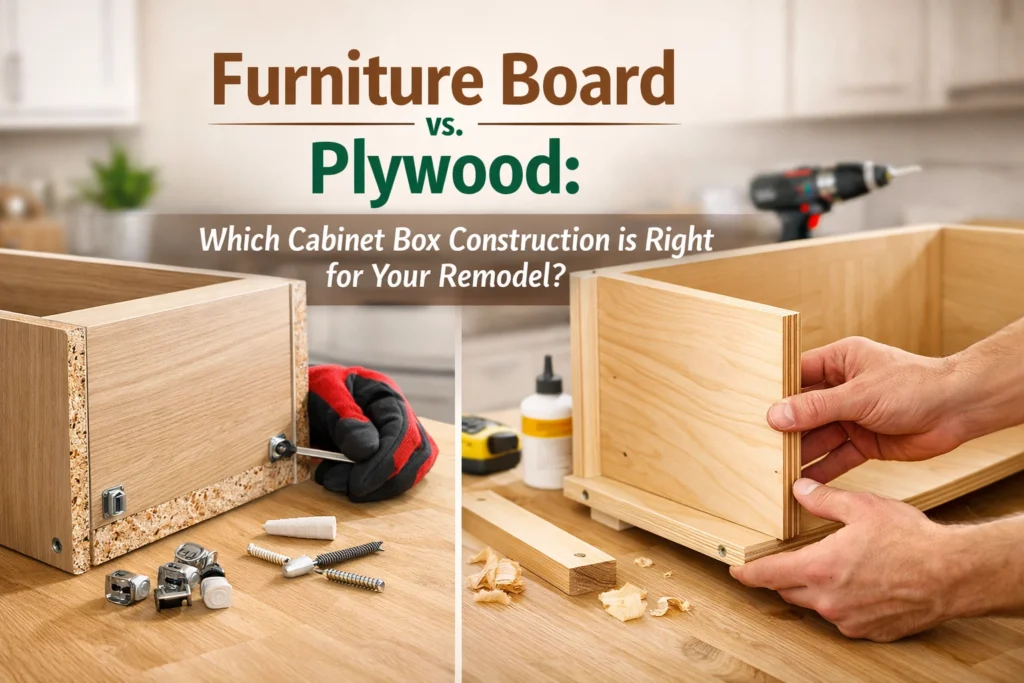
When you’re planning a kitchen remodel, you’ll make dozens of decisions: from paint colors to hardware finishes. But one choice that often gets overlooked is what’s hiding inside your cabinet boxes. The plywood vs. furniture board debate is one that we get asked about constantly here at Janesville Hardware – and for good reason. The box construction material can seriously impact how your cabinets perform over the years, and here in Minnesota where we deal with everything from humid summers to dry winter heating, it matters even more.
At Janesville Hardware, we get asked about this all the time: “Should I go with furniture board or upgrade to plywood?” The truth is, there’s no one-size-fits-all answer. Let’s break down what each option brings to the table so you can make the best choice for your home and budget.
Plywood vs. Furniture Board: What’s the Difference?
Before we dive into the pros and cons, let’s get clear on what these materials actually are.
Furniture board (sometimes called particleboard or MDF) is made from wood particles, sawdust, and resin that’s compressed together under heat and pressure. Think of it as the ultimate recycling project: it uses byproducts from other wood manufacturing processes. The result is a smooth, uniform material that’s been a cabinet industry standard for decades.
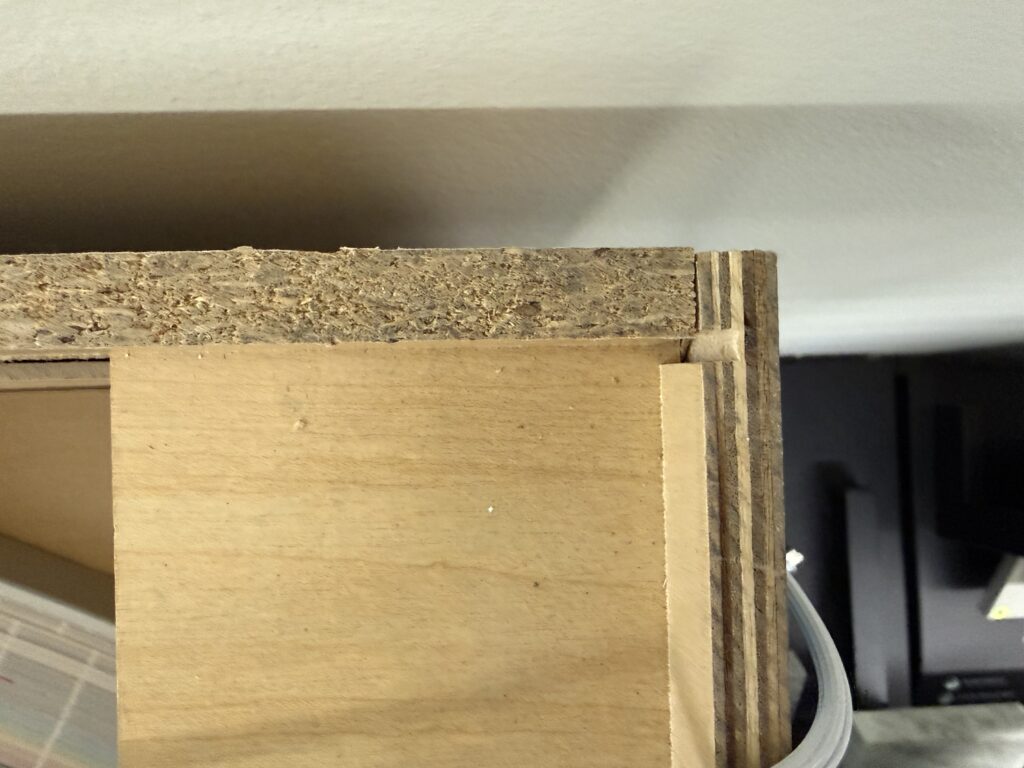
Plywood, on the other hand, is made from thin layers of wood veneer that are glued together with the grain running in alternating directions. This cross-grain construction is what gives plywood its strength and stability. It’s been around forever and has a solid reputation for durability.
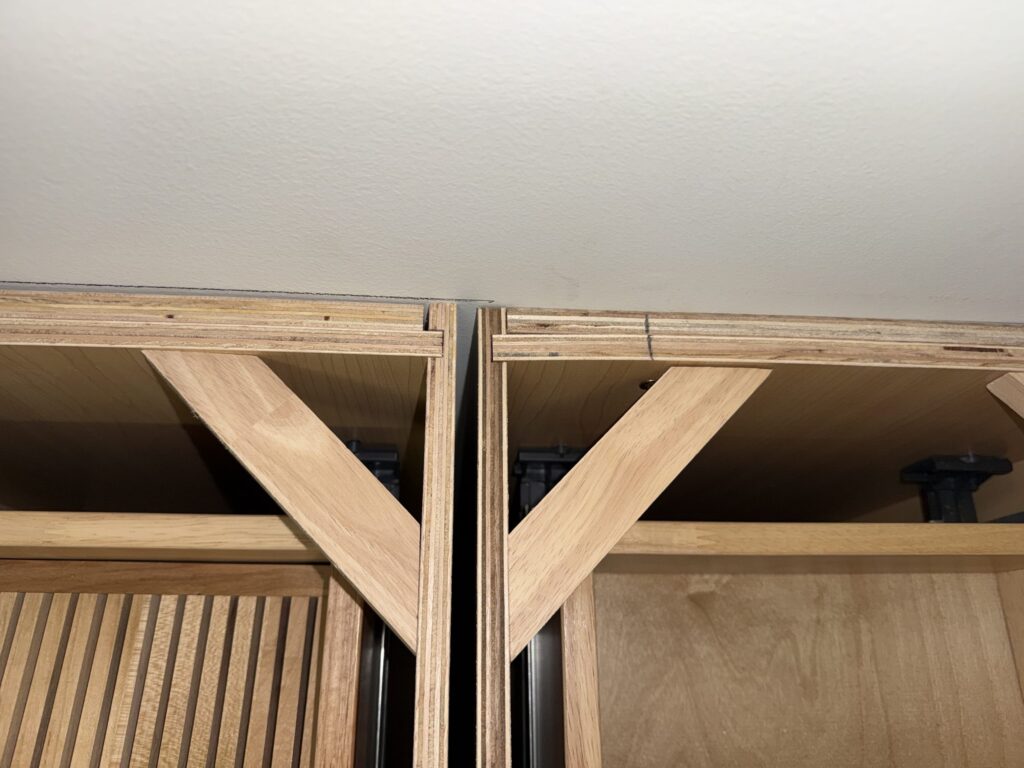 The Head-to-Head Comparison
Let’s get into the nitty-gritty of how these materials stack up against each other.
Strength and Stability
Plywood takes the win here. Those alternating wood layers create a structure that resists sagging and deflection, even when you’re storing your complete set of cast iron cookware. The cross-grain construction means it stays flat and true over time.
Furniture board is perfectly adequate for everyday use, but it doesn’t have quite the same structural strength. For most standard cabinet applications, you won’t notice a difference: but if you’re planning to load up your cabinets heavily or need to support a substantial countertop, plywood provides extra peace of mind.
Moisture Resistance
This is where the difference really matters, especially in kitchens. Plywood is significantly more resistant to moisture. If you get a spill under the sink or deal with the occasional splash, plywood can handle it without major drama. It might swell slightly if saturated, but it generally bounces back once it dries out.
Furniture board? Not so forgiving. When it gets wet, it tends to swell and can lose its structural integrity. Once furniture board swells from water damage, it doesn’t really recover. This doesn’t mean it’s a terrible choice: it just means you need to be more mindful about where you use it.

Holding Power
Ever had a cabinet hinge work itself loose? The material your cabinet box is made from plays a big role in how well it holds screws and hardware over time.
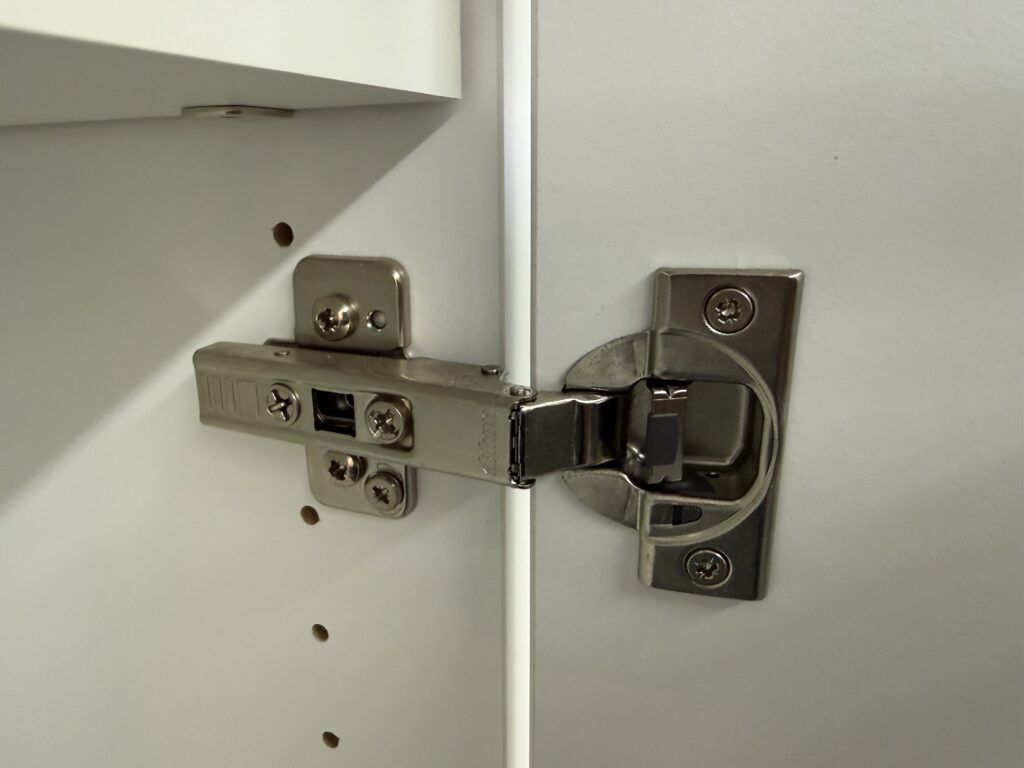
Plywood grips screws tightly thanks to its layered construction. Your hinges, drawer slides, and other hardware stay securely in place year after year. Furniture board can hold fasteners just fine initially, but they may gradually loosen over time, especially with frequent use. High-density furniture board does better in this department than standard grades.
Weight Considerations
Here’s one area where furniture board might surprise you: it’s actually heavier than plywood. If you’re doing the installation yourself or have concerns about wall support, that’s worth knowing. The weight difference isn’t huge, but when you’re hanging a full run of upper cabinets, every pound counts.
Longevity
With proper care, plywood cabinets can last 20 to 30 years or more. They age gracefully and maintain their structural integrity throughout their lifespan. Furniture board has a shorter expected lifespan, particularly in high-moisture areas or with heavy use. That said, plenty of furniture board cabinets serve homeowners well for many years when properly maintained.
Let’s Talk About Cost
Here’s the reality: plywood typically costs about 8 to 10 percent more than furniture board. For a full kitchen, that can add up to a meaningful difference: we’re talking potentially a few hundred to over a thousand dollars depending on the size of your project.
That price difference is exactly why furniture board remains a popular choice. If you’re remodeling on a tight budget, choosing furniture board for your cabinet boxes allows you to allocate more money toward other aspects of your kitchen: maybe those quartz countertops you’ve been dreaming about, or that farmhouse sink.
The upgrade to plywood is an investment in longevity and durability. You’re essentially paying now to avoid potential problems down the road. For many homeowners, especially those planning to stay in their homes long-term, it’s money well spent.
When Should You Choose Each Option?
So when does each material make the most sense?
Go with Plywood If:
- You’re installing cabinets under the sink or anywhere moisture is a concern
- You have a busy household with heavy daily kitchen use
- You’re supporting substantial countertop materials like granite or quartz
- You want maximum longevity from your investment
- You’re planning to stay in your home for many years
- You want the strongest possible cabinet structure
Furniture Board Works Great When:
- You’re working with a tighter budget
- The cabinets are in low-moisture areas (like a pantry or upper cabinets far from water sources)
- You’re doing a rental property or flip where cost control matters
- You opt for high-density furniture board for better performance
- You’re diligent about cleaning up spills promptly
Cabinet Brands at Janesville Hardware: Wolf, Bridgewood, and JSI
Here in Janesville, we carry three excellent cabinet brands, each with different approaches to box construction.
Wolf Cabinetry and Bridgewood Cabinetry both come standard with furniture board box construction, which helps keep the base price accessible for more homeowners. But here’s the great part: both brands offer you the option to upgrade to plywood box construction if that’s the route you want to go. This flexibility means you can choose what makes sense for your specific situation and budget.
JSI Cabinets takes a different approach: they build all their cabinets with plywood box construction as standard. There’s no upgrade decision to make because you’re automatically getting the durability and moisture resistance of plywood. For some homeowners, this simplicity is appealing, and it guarantees you’re getting maximum longevity from day one.
The Bottom Line
The honest truth? Both materials can serve you well in a kitchen remodel. The “right” choice depends on your specific circumstances: your budget, where the cabinets are going, how you use your kitchen, and how long you plan to stay in your home.
Don’t let anyone tell you that furniture board cabinets are “cheap” or that you must have plywood to have a quality kitchen. Plenty of beautiful, functional kitchens have been built with furniture board boxes. The key is making an informed decision based on your needs, not just following a rule.
That said, if you can swing the upgrade to plywood: especially for under-sink cabinets and any high-moisture areas: it’s generally worth the investment. Think of it as buying yourself peace of mind and a few extra years of cabinet life.
Stop by Janesville Hardware and let’s talk through your specific project. We can show you samples of all three cabinet brands, discuss your layout and moisture concerns, and help you figure out the smartest approach for your remodel. Sometimes the best solution is a mix: plywood where it matters most and furniture board where you can save some money.
Your kitchen remodel should be exciting, not stressful. We’re here to help you make confident decisions that you’ll be happy with for years to come. Visit us and let’s get your project rolling!